
The Traditional Role of Ashwagandha in Ayurvedic Wellness
Aryan Herbals Team
Wellness Expert

Ashwagandha (Withania somnifera) is one of the most widely recognised botanicals in the Ayurvedic tradition. Known in Sanskrit as "the smell of a horse" — a reference to both its distinct aroma and the vitality associated with it — ashwagandha root has been used for generations as a rasayana, a category of botanicals traditionally valued for supporting general wellbeing and a balanced lifestyle.
A Botanical With Deep Roots
Ashwagandha is a small evergreen shrub that grows in the dry regions of India, North Africa and the Middle East. The name refers to the earthy scent of its root, which is the part of the plant most commonly prepared for use. In Ayurveda, the root is dried and ground into a fine powder known as churna, which forms the base of many traditional preparations.
How It Was Traditionally Prepared
In classical Ayurvedic practice, ashwagandha root was often prepared as a powder mixed with warm milk and a touch of honey or ghee. This combination was considered nourishing and was traditionally taken in the evening as part of a calming wind-down routine. Some preparations also combined ashwagandha with other botanicals such as shatavari or bala, depending on the intended use.
Today, the same root is available as a powder, a tablet or a standardised extract, making it easy to incorporate into a modern daily routine while staying true to its traditional origins.
Choosing a Quality Ashwagandha Product
When selecting an ashwagandha product, look for a few key indicators of quality:
- Pure root powder, free from fillers or artificial additives
- Grown and processed in certified facilities that follow good manufacturing practice
- Clearly labelled with the botanical name (Withania somnifera) and the part used (root)
- Batch tested for purity and consistency
At Aryan Herbals, our ashwagandha is prepared as both a traditional powder and a convenient tablet, made in an ISO 22000:2005 certified facility to help ensure consistent quality.
Incorporating Ashwagandha Into Your Day
A traditional approach to enjoying ashwagandha:
- Morning: A quarter to half a teaspoon of powder stirred into warm milk or a plant-based alternative
- Evening: A tablet with water as part of your wind-down routine
- With food: Traditionally taken alongside a meal to support absorption
Start with a modest amount and build gradually. As with any food supplement, consistency over time is traditionally considered more meaningful than large single doses.
A Note on Traditional Use
Ashwagandha has been part of Ayurvedic tradition for thousands of years, and its continued popularity speaks to the value placed on it by generations of practitioners. Modern interest in this botanical continues to grow, and it is widely available as a food supplement.
This article is for general information and educational interest only. Our products are food supplements, not medicines, and are not a substitute for professional medical advice. Please consult a qualified healthcare practitioner before use, especially if pregnant, breastfeeding, or taking medication, and always read the label.
Featured Products


Recommended For You

Tulsi (Holy Basil): The Sacred Herb of Ayurveda
Tulsi, or holy basil, is revered in Ayurveda as the 'queen of herbs'. Discover its sacred place in Indian tradition and how it is enjoyed today.

Neem: The Traditional 'Village Pharmacy' of Ayurveda
Neem is so valued in Ayurveda it has been called the 'village pharmacy'. Discover its traditional uses, how it is prepared, and how to choose a quality product.
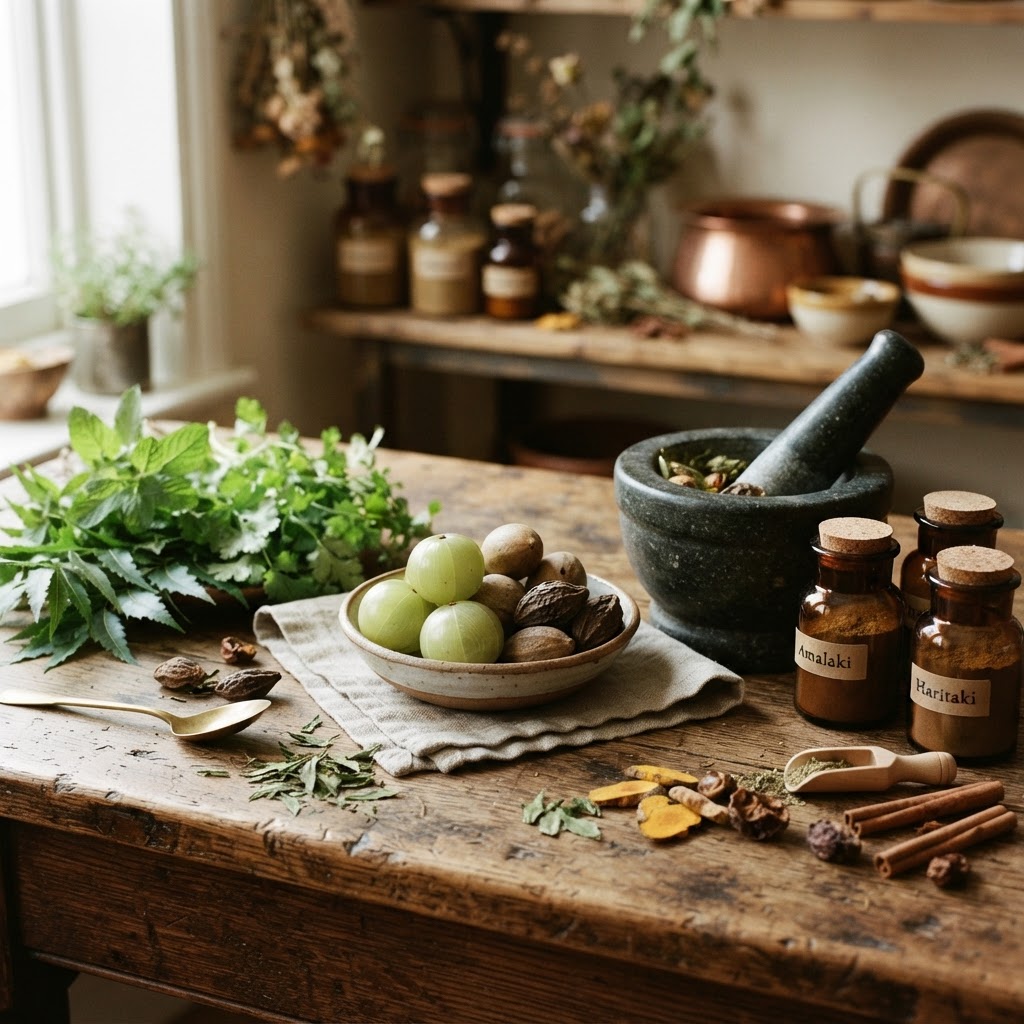
Triphala: The Three Fruits of Ayurveda
Triphala means 'three fruits'. Discover the botanicals behind this celebrated Ayurvedic preparation and how it has been used in traditional practice.
Curated based on your browsing history, purchases, and wellness interests