
Tulsi (Holy Basil): The Sacred Herb of Ayurveda
Dr. Priya Sharma
Wellness Expert
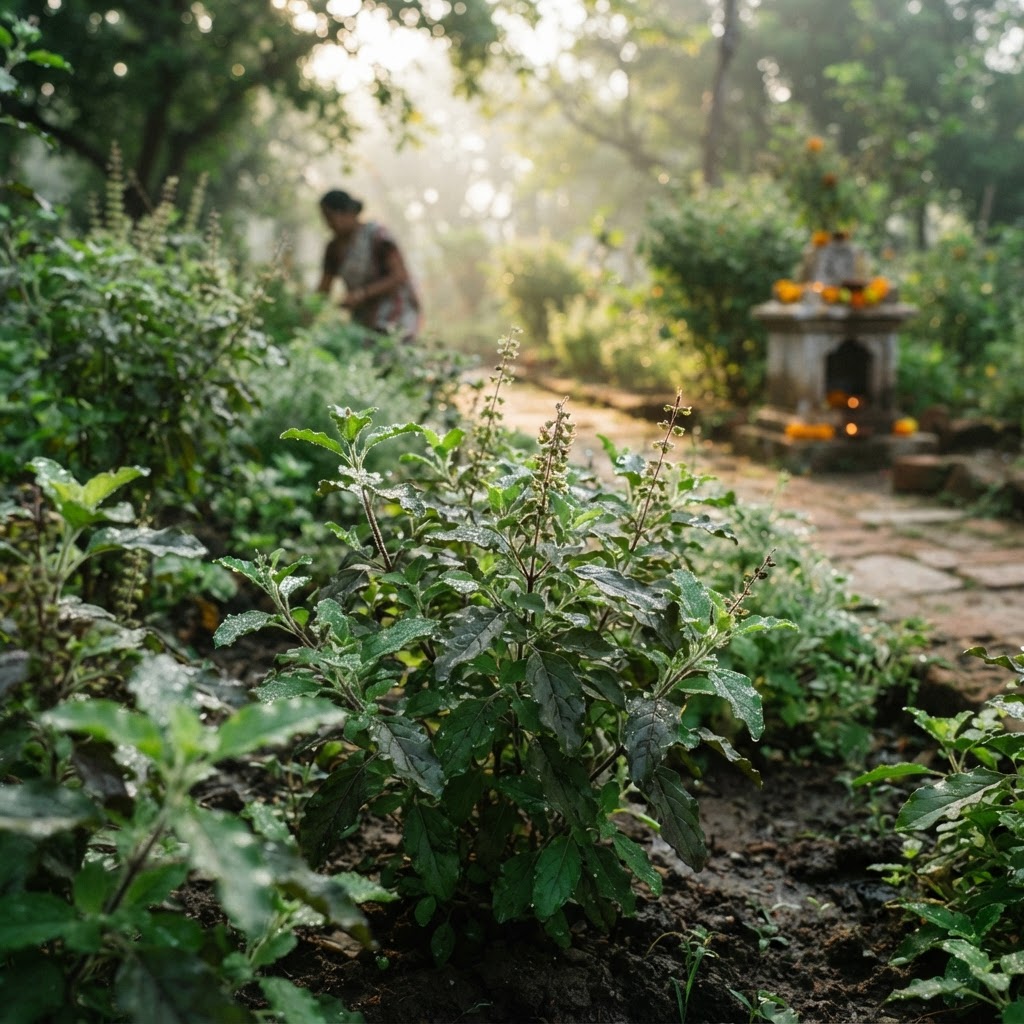
In countless Indian homes, a small pot of tulsi (Ocimum sanctum) sits in the courtyard, tended daily as both a sacred plant and a household staple. Known in English as holy basil, tulsi is so deeply woven into daily life and worship that it is often called the "queen of herbs".
A Sacred Plant
Tulsi holds a unique place in Hindu tradition. Believed to be an incarnation of the goddess Lakshmi, the plant is grown in many Hindu households and worshipped each morning. Its leaves are used in puja and offered in prayer. Beyond its spiritual significance, tulsi has been central to Ayurvedic practice for thousands of years.
Varieties of Tulsi
There are three main varieties traditionally used:
- Rama tulsi — bright green leaves with a fresh, mild aroma
- Shyama tulsi — darker leaves with a sharper, more peppery note
- Vana tulsi — wild tulsi, with a clove-like fragrance
Each variety is valued in its own right, and they are often combined in traditional preparations.
How Tulsi Is Enjoyed
Tulsi is one of the most approachable Ayurvedic botanicals, traditionally enjoyed as a daily tea:
- Tulsi tea: A handful of fresh leaves steeped in hot water for 5 minutes — a daily ritual in many Indian homes
- Tulsi juice: Made from the leaves, often taken in small quantities with water
- Tulsi powder: Dried, ground leaves that can be mixed into warm water or honey
- Tulsi tablets: A convenient modern form
In many households, tulsi tea is the first drink of the morning, sipped before breakfast.
Choosing a Quality Tulsi Product
Look for:
- Clearly labelled botanical name (Ocimum sanctum or Ocimum tenuiflorum)
- Pure leaf, free from fillers
- Made in a certified facility following good manufacturing practice
Aryan Herbals offers tulsi as a juice, a powder and a tablet, made in an ISO 22000:2005 certified facility.
Growing Your Own Tulsi
One of the loveliest ways to enjoy tulsi is to grow it yourself. A small plant on a sunny windowsill provides fresh leaves for tea year-round. Tulsi is hardy and forgiving, needing only sunlight, regular watering and well-drained soil. Pinch the leaves regularly to encourage bushy growth.
A Note on Traditional Use
Tulsi's sacred status reflects the deep respect it has earned across thousands of years of daily use. Whether enjoyed as a tea, a juice or a tablet, it remains one of the most popular botanicals in Ayurvedic tradition.
This article is for general information and educational interest only. Our products are food supplements, not medicines. Please consult a qualified healthcare practitioner before use, especially if pregnant, breastfeeding, or taking medication, and always read the label.
Featured Products


Recommended For You

The Traditional Role of Ashwagandha in Ayurvedic Wellness
Discover how ashwagandha has been valued in Ayurvedic tradition for centuries, how it is prepared, and how to choose a quality supplement for your daily routine.

Neem: The Traditional 'Village Pharmacy' of Ayurveda
Neem is so valued in Ayurveda it has been called the 'village pharmacy'. Discover its traditional uses, how it is prepared, and how to choose a quality product.
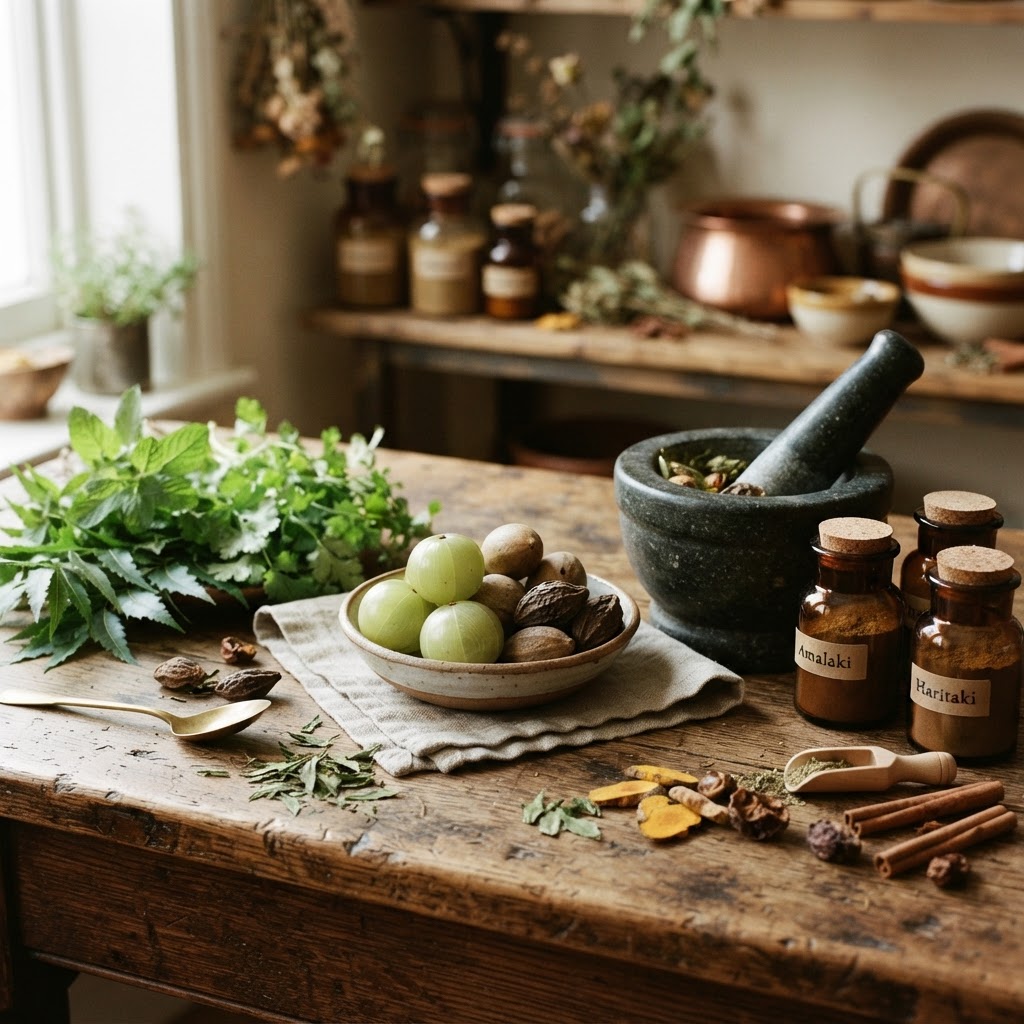
Triphala: The Three Fruits of Ayurveda
Triphala means 'three fruits'. Discover the botanicals behind this celebrated Ayurvedic preparation and how it has been used in traditional practice.
Curated based on your browsing history, purchases, and wellness interests